
Artificial intelligence (AI) is changing how students learn, create, and solve problems. Educators everywhere are asking the same question: How do we teach in a way that prepares students for this future? In our recent TechnoKids webinar Prepare Students for AI: Project-Based Learning in an AI World, attendees explored why Project-Based Learning (PBL) is uniquely suited to support student growth in an AI-rich educational landscape. The webinar explores how educators can meet the challenge of teaching in an age where AI tools are readily available to students. AI is not something to block. Instead, it’s a partner in student-driven learning. The session emphasizes how PBL offers a powerful and meaningful framework for harnessing AI in a way that deepens understanding, builds essential skills, and retains student agency.
Watch the Webinar: Project Based Learning and AI
Explore the full webinar to discover practical strategies and classroom ready ideas for integrating AI into project-based learning.
Why PBL Matters in an AI World
- Encouraging Deep Learning and Critical Thinking
Traditional assignments can be easily automated by AI. PBL helps students think deeply, connect ideas across subjects, and tackle complex problems, skills that AI cannot replicate. - Promoting Ownership and Voice
AI can produce text, images, and reports, but it can’t replace the unique perspective each student brings. With PBL, students pursue personally meaningful work, which boosts engagement and self-expression. - Embedding Responsible AI Use
Instead of avoiding AI, PBL invites students to use it thoughtfully. For example: using AI tools to brainstorm ideas, clarify research, or refine a prototype – but always paired with teacher guidance and critical evaluation.
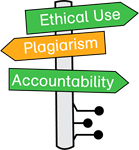
This balanced approach helps students become competent and ethical users of AI, rather than passive consumers.
Reframing AI as a Learning Companion
One of the key takeaways for educators in the webinar is a mindset shift regarding AI. Rather than seeing AI strictly as a threat to academic integrity or effort, the session positions AI tools as resources that can support student inquiry and creativity when used intentionally.
- Planning with AI Support: Let students use AI as a thinking partner to generate essential questions, project plans, or idea lists. Use AI prompts to expand thinking, not replace it. Then follow up with teacher-led or student group discussions.
- Scaffolding Inquiry: Use AI tools to help students research at appropriate reading levels, locate credible sources, or visualize data, always pairing digital support with human judgement. This reinforces digital literacy habits.
- Reflection and Iteration: Encourage students to justify their choices when using AI and to revise their work based on feedback from peers, teachers, and themselves. With teacher guidance, students can evaluate and refine AI-generated work rather than accept it uncritically – a key part of digital citizenship.
- Collaboration and Showcase: Students work in teams, present to authentic audiences, and celebrate learning, preserving agency and creative voice. These are aspects of PBL that AI can’t replace.
How PBL Supports Future-Ready Skills
In a world where AI tools are increasingly accessible, quality of thinking becomes more important than ever. PBL equips students with:
- Adaptive problem-solving skills
- Collaboration and communication expertise
- Creative and ethical use of technology
- Ownership of learning process and outcomes
These are competencies that matter far beyond the classroom – in higher education, the workplace, and everyday life.
The Big Picture for Project-Based Learning in an AI World
The future of education isn’t about banning AI. It’s about preparing students to work with it wisely, thoughtfully, and creatively. Project-Based Learning is a powerful way to help learners build deep understanding, express their ideas, and engage meaningfully with the world around them, AI tools included. In doing so, educators help learners build both human-centered competencies and responsible digital skills that support lifelong learning and future success.
To see these ideas in action, watch the Project-Based Learning in an AI World webinar.
About the Webinar Presenter
Christa Love is an educator with over 25 years of experience. She is a curriculum developer with TechnoKids, where she has created and field tested more than 40 technology projects focused on digital literacy, coding, and most recently AI skills. She has taught grades K to 8 and brings a strong classroom perspective to curriculum design across all subject areas. Christa is an occasional teacher with the Hamilton Wentworth District School Board, is in good standing with the Ontario College of Teachers, and is a member of the Educational Computing Organization of Ontario and ISTE+ASCD. She holds a degree in Child Studies, a Bachelor of Education, and a Master of Education in Curriculum Studies from Brock University, and is committed to ongoing professional learning.
Want practical classroom solutions? Explore project-based learning using TechnoKids courses.
Ready to take the next step? Browse TechnoKids digital literacy and coding courses.